← Projects

Electron Microscopy

Scanning Electron Microscopy

From Surface Morphology to Elemental Analysis

SEM uses a focused beam of electrons to explore the surface and composition of materials at micro- and nanometric scales. By scanning the sample point by point, it reconstructs images from signals generated by electron–matter interactions — revealing topography, phase contrast, elemental composition, and thin-sample internal structure.

SE Surface Morphology
BSE Atomic Number Contrast
EDS Elemental Analysis
STEM Thin Sample Imaging

1. What is a Scanning Electron Microscope?

A SEM is an imaging instrument that uses a narrow electron probe instead of visible light. The probe is focused onto the sample surface and scanned line by line. At each point, the interaction between the electrons and the material produces signals collected by dedicated detectors. The final image is a map of signal intensity as a function of beam position — not a direct optical projection.

This makes SEM very flexible: depending on the detector and acquisition conditions, the same instrument can reveal surface texture, local composition, phase contrast, elemental distribution, or nanoscale structural details.

▸ Technical detail — electrons as a probe

The SEM uses electrons accelerated typically between 1 and 30 kV. The de Broglie wavelength of these electrons is in the picometer range — orders of magnitude smaller than visible light. However, the practical SEM resolution is not simply equal to this wavelength. It is governed by the focused probe size, lens aberrations, beam-sample interaction, and signal generation volume.

λ = h / √[ 2m₀eV (1 + eV/2m₀c²) ]

At 20 kV, λ ≈ 8.6 pm. In practice, spatial resolution is limited by probe size and signal volume, not wavelength alone.

The electron beam scans the sample point by point — the image is reconstructed from the detected signal at each position, not from a direct optical projection.
Electron Column surface SE Signal map = SEM image SCANNING PRINCIPLE Fig. 1 — Raster scanning principle
Primary beam SE · ~5 nm BSE · ~100 nm EDS · ~1–5 μm ETD depth INTERACTION VOLUME Fig. 2 — Electron–matter interaction volume

2. Electron–Matter Interaction

When the electron beam enters the sample, it does not stop at the surface. Electrons undergo elastic and inelastic scattering, creating an interaction volume below the impact point. Different signals escape from different depths and carry different types of information.

Secondary electrons originate from the first few nanometers and are ideal for topography. Backscattered electrons escape from deeper regions and are sensitive to atomic number. Characteristic X-rays used in EDS come from the largest volume, explaining why EDS has lower spatial resolution than SE/BSE imaging.

▸ Kanaya–Okayama electron range

The maximum electron penetration range can be estimated empirically:

R (μm) = 0.0276 · A / (Z⁰·⁸⁸⁹ · ρ) · E₀¹·⁶⁷

where A is atomic mass (g/mol), Z is atomic number, ρ is density (g/cm³), and E₀ is beam energy (keV). Higher beam energy increases the interaction volume, while denser and higher-Z materials reduce penetration.

Each SEM signal comes from a different depth — surface-sensitive signals give high-resolution morphology, while deeper signals provide compositional and chemical information.

3. SEM Signal Modes

Secondary Electrons · SE

Secondary electrons are low-energy electrons emitted from the first few nanometers of the sample surface. Because they originate so close to the surface, they are extremely sensitive to relief and topography. Edges, slopes, and protrusions emit more secondary electrons and therefore appear brighter in SE images.

SE imaging is the most common SEM mode and provides intuitive, three-dimensional renderings of surface texture in metals, ceramics, polymers, and biological specimens.

▸ Technical parameters
  • Energy range: typically < 50 eV
  • Escape depth: ~0.5–5 nm
  • Detectors: Everhart-Thornley (ETD), in-lens (ILD)
  • Resolution: highest of all SEM modes in FE-SEM
  • Limitation: charging artifacts in non-conductive samples
  • Low kV (1–5 kV) improves surface specificity and reduces charging
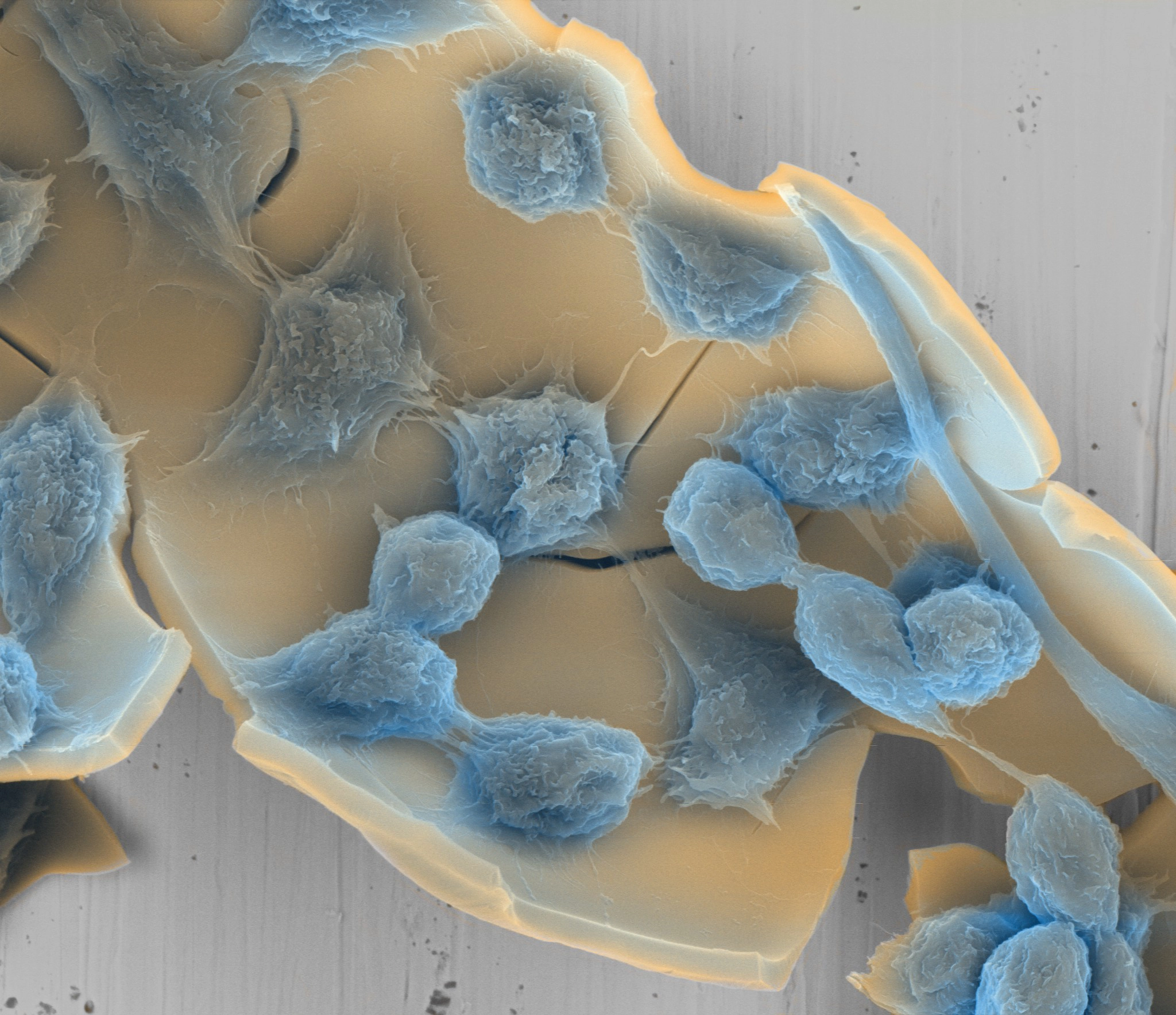
SE imaging answers: What does the surface look like?
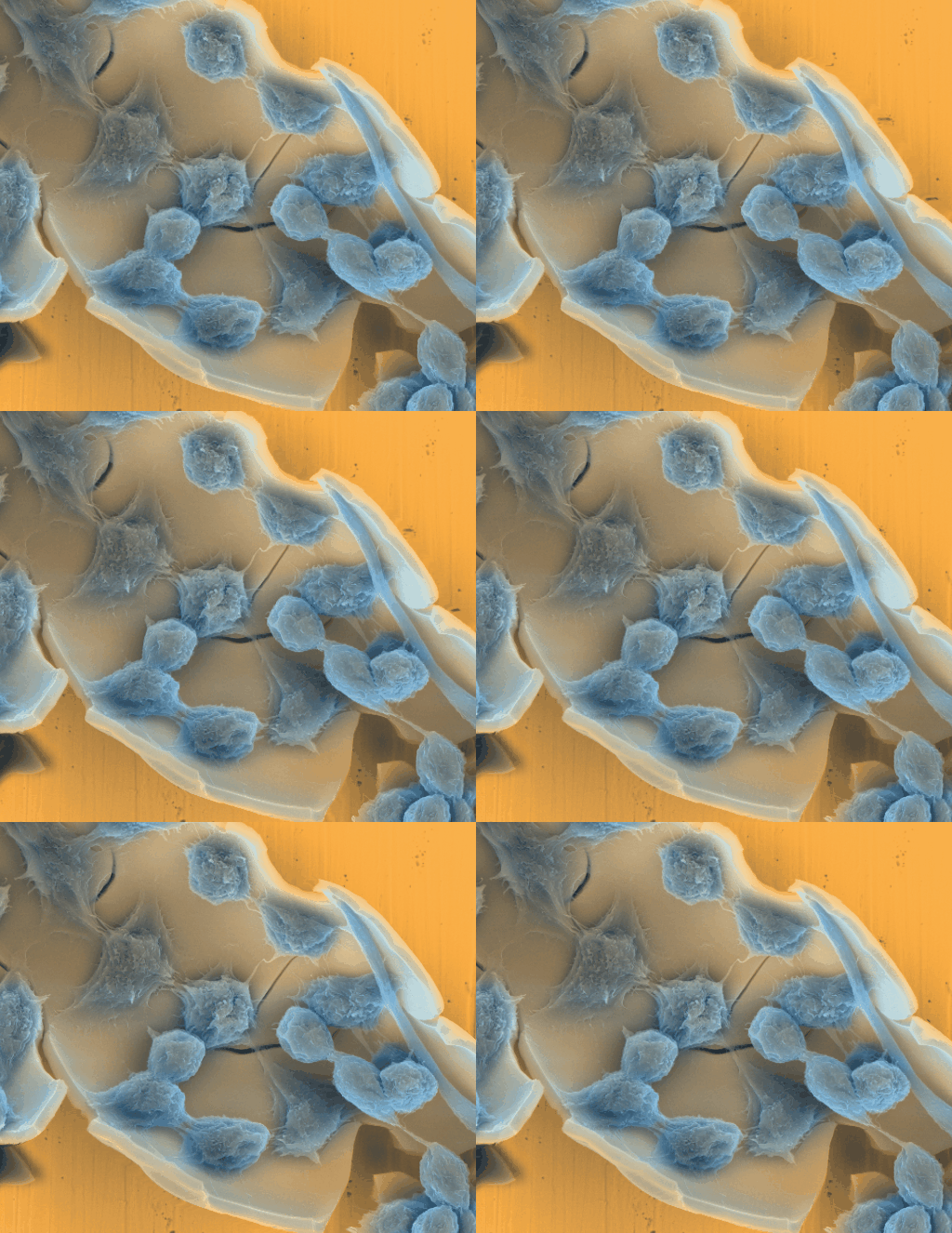
Cells grown on biocompatible ceramic surface — SE mode Cells on biocompatible ceramic surface · SE
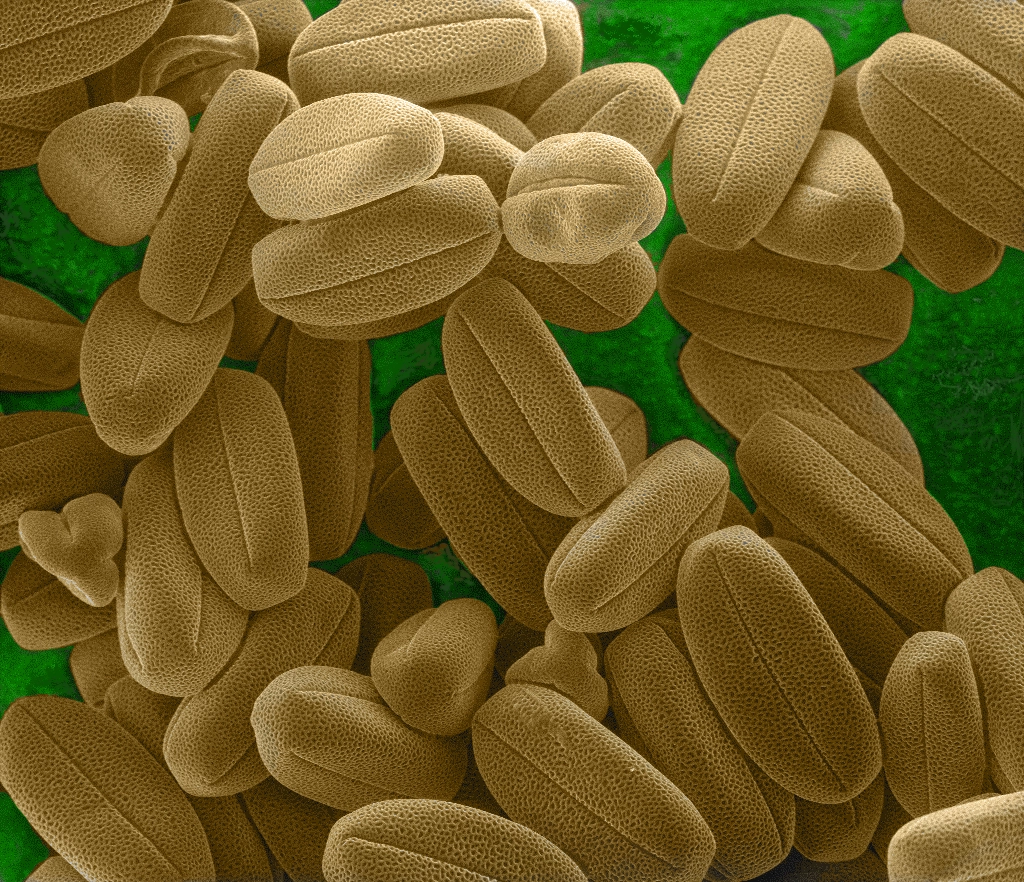
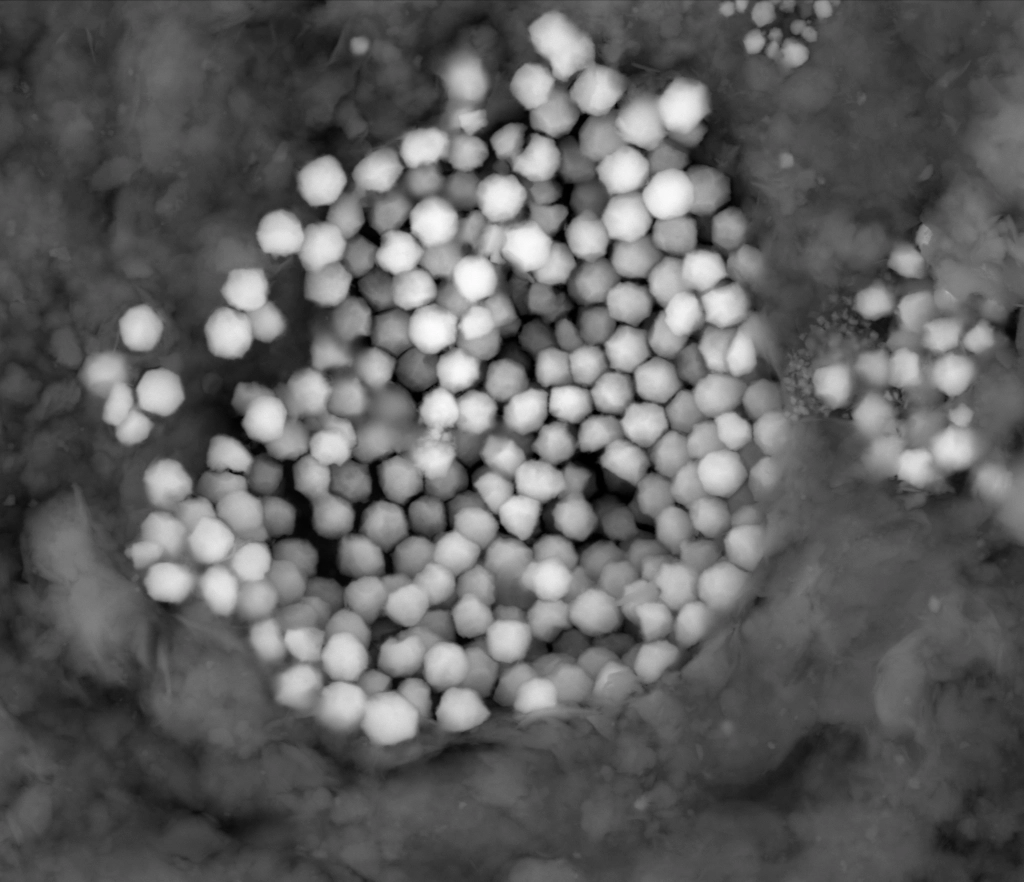
Pollen surface microstructure — SE mode Pollen surface microstructure · SE

Backscattered Electrons · BSE

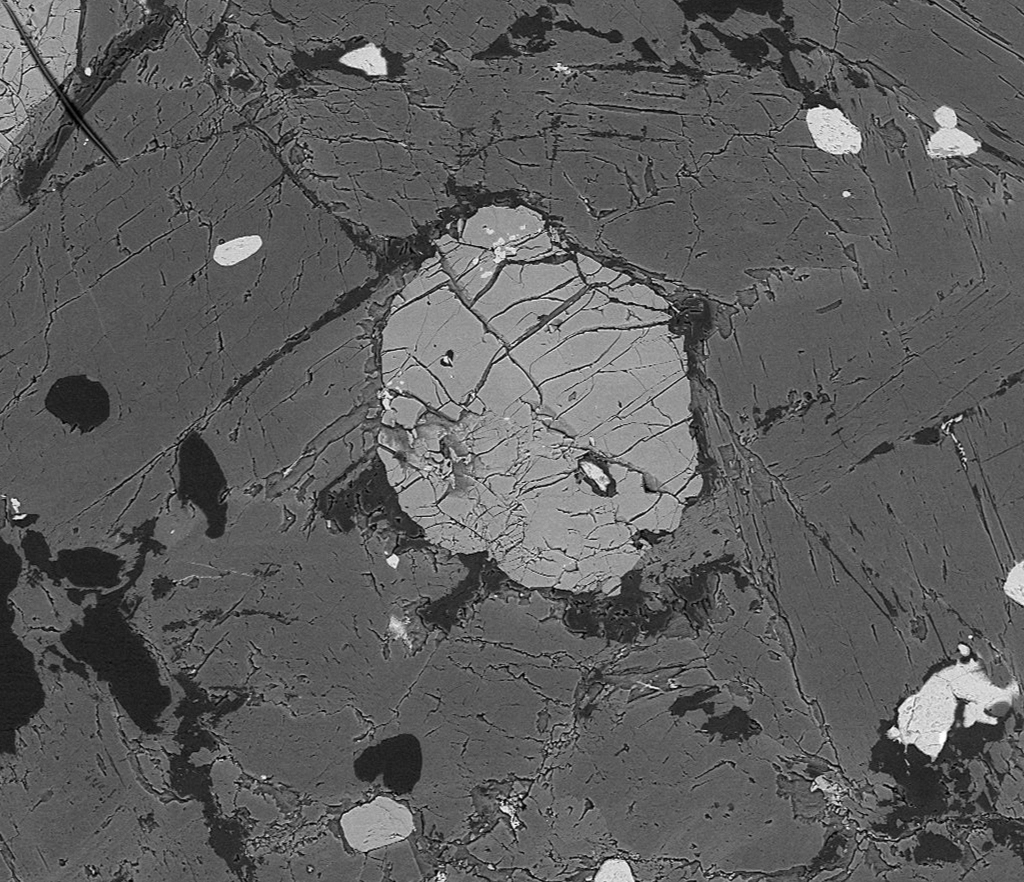
Backscattered electrons are primary beam electrons that have been deflected back out of the sample by elastic scattering. Heavier elements scatter electrons more strongly than lighter ones — regions containing elements of higher atomic number appear brighter in BSE images, providing direct compositional contrast.

BSE imaging is widely used in geology, metallurgy, and materials science to separate mineral phases, alloy components, or inclusions based on average atomic number, even when their surface topography is similar.

▸ Technical parameters
  • Energy range: 0.2E₀ to ~0.9E₀ (high fraction of primary energy)
  • Escape depth: larger than SE — ~100 nm to several μm depending on E₀ and Z
  • Detectors: solid-state annular BSE detector above the sample
  • Spatial resolution: lower than SE due to larger interaction volume
  • Higher kV (10–20 kV) enhances atomic number contrast in BSE
  • BSE coefficient η increases monotonically with atomic number Z
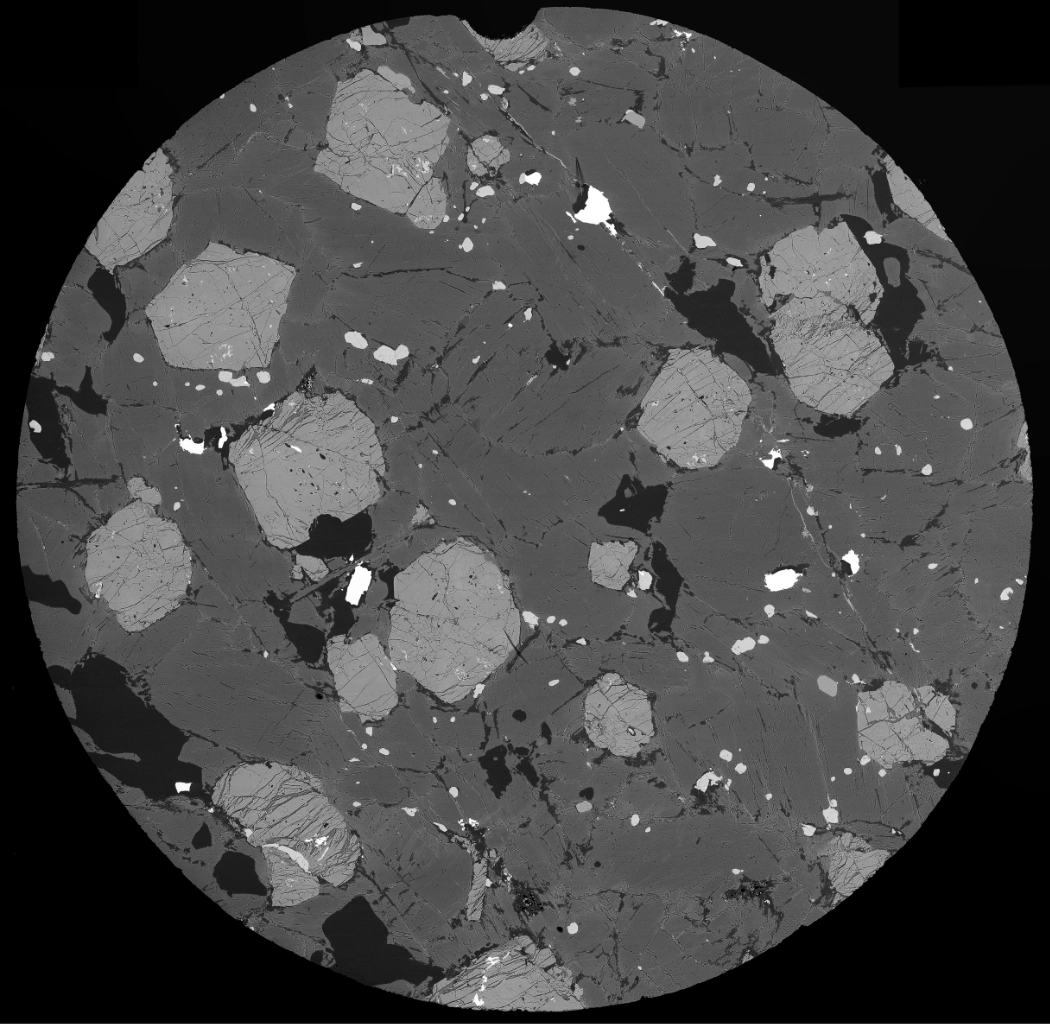
BSE imaging answers: Where are the heavier or lighter phases?

EDS — Energy-Dispersive X-ray Spectroscopy

EDS detects characteristic X-rays emitted when the electron beam ionizes inner electron shells. Each element emits X-rays at specific energies — a chemical fingerprint. By measuring those energies and intensities, the SEM identifies which elements are present and maps their spatial distribution.

EDS provides spectra (energy vs. counts), elemental maps, point analyses, and compositional line scans. Spatial resolution is limited by the X-ray generation volume, typically in the micrometer range for bulk samples.

▸ Technical parameters & Moseley's law

The energy of characteristic X-rays is linked to atomic number by Moseley's law:

√ν = a (Z − σ)

This is why EDS can identify elements — each Z produces a unique set of X-ray energies. Key practical parameters:

  • Primary voltage should be ~1.5–3× the critical ionization energy of the line measured
  • EDS detector: silicon drift detector (SDD), energy resolution ~125–135 eV FWHM at Mn Kα
  • Spatial resolution in bulk: ~0.5–5 μm depending on E₀ and material
  • Main limitations: peak overlaps, low-energy absorption, matrix effects, quantification uncertainty
  • Carbon coating preferred over Au/Pd for quantitative EDS
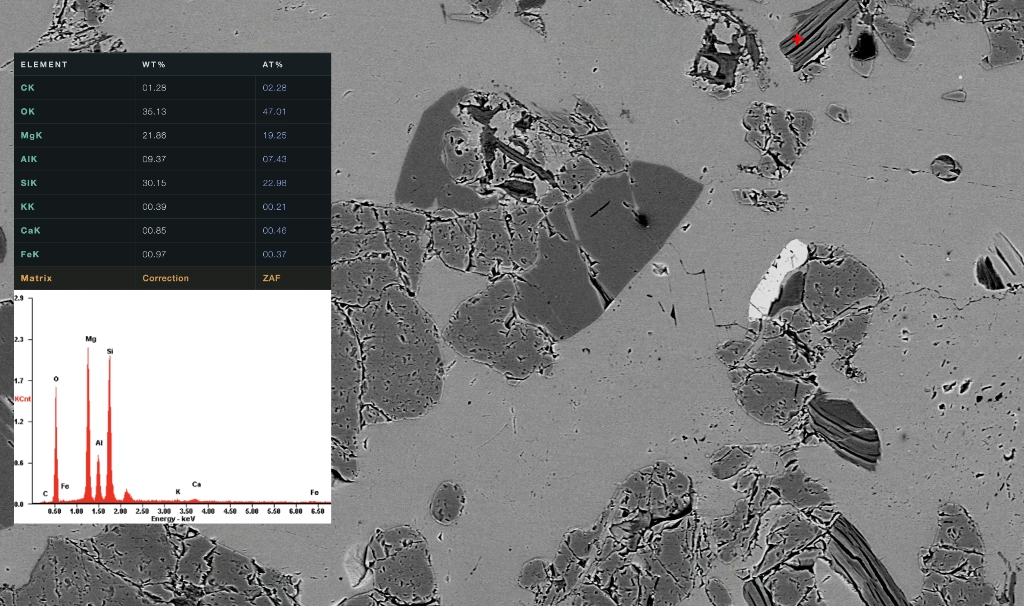
EDS answers: Which elements are present, and where are they located?
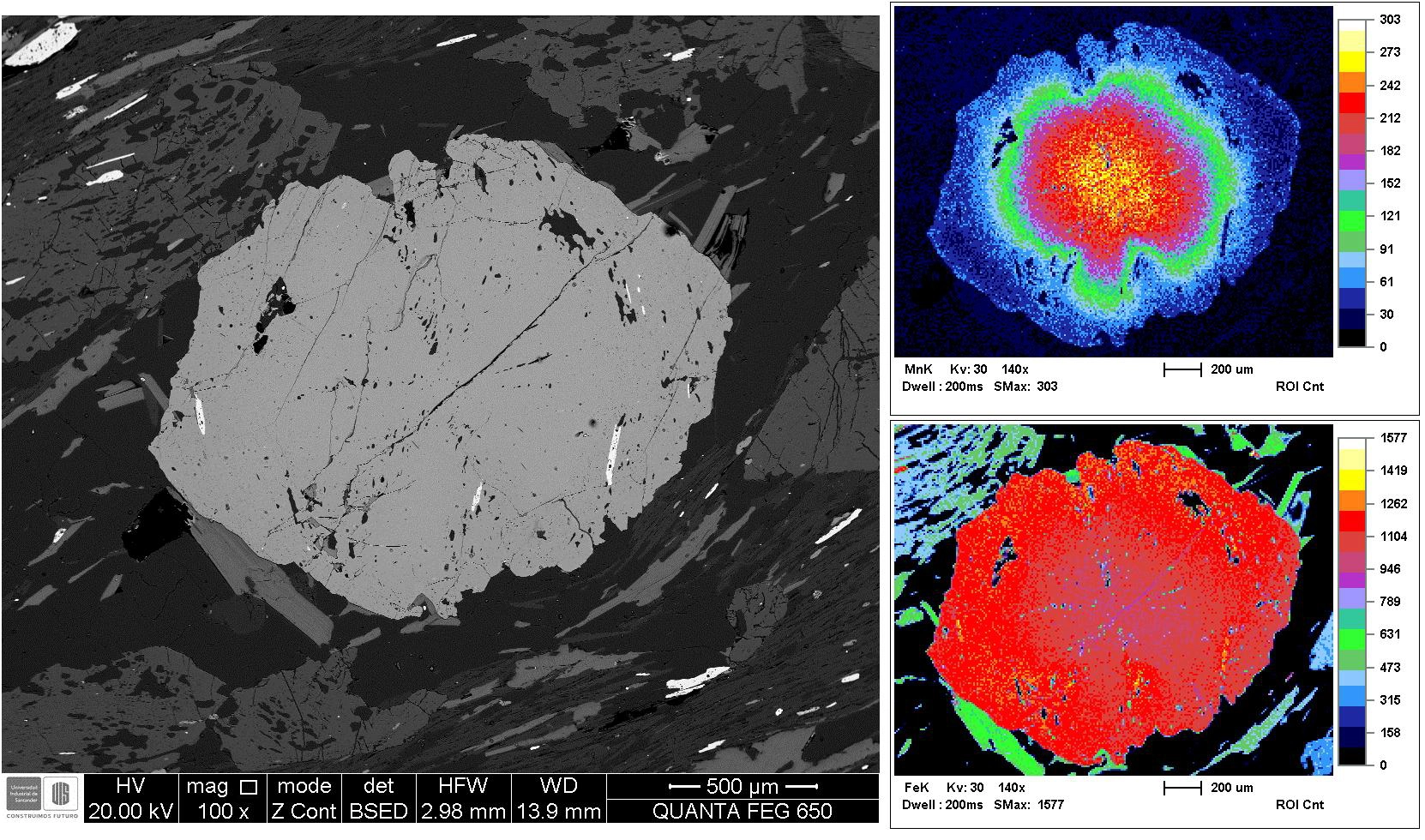
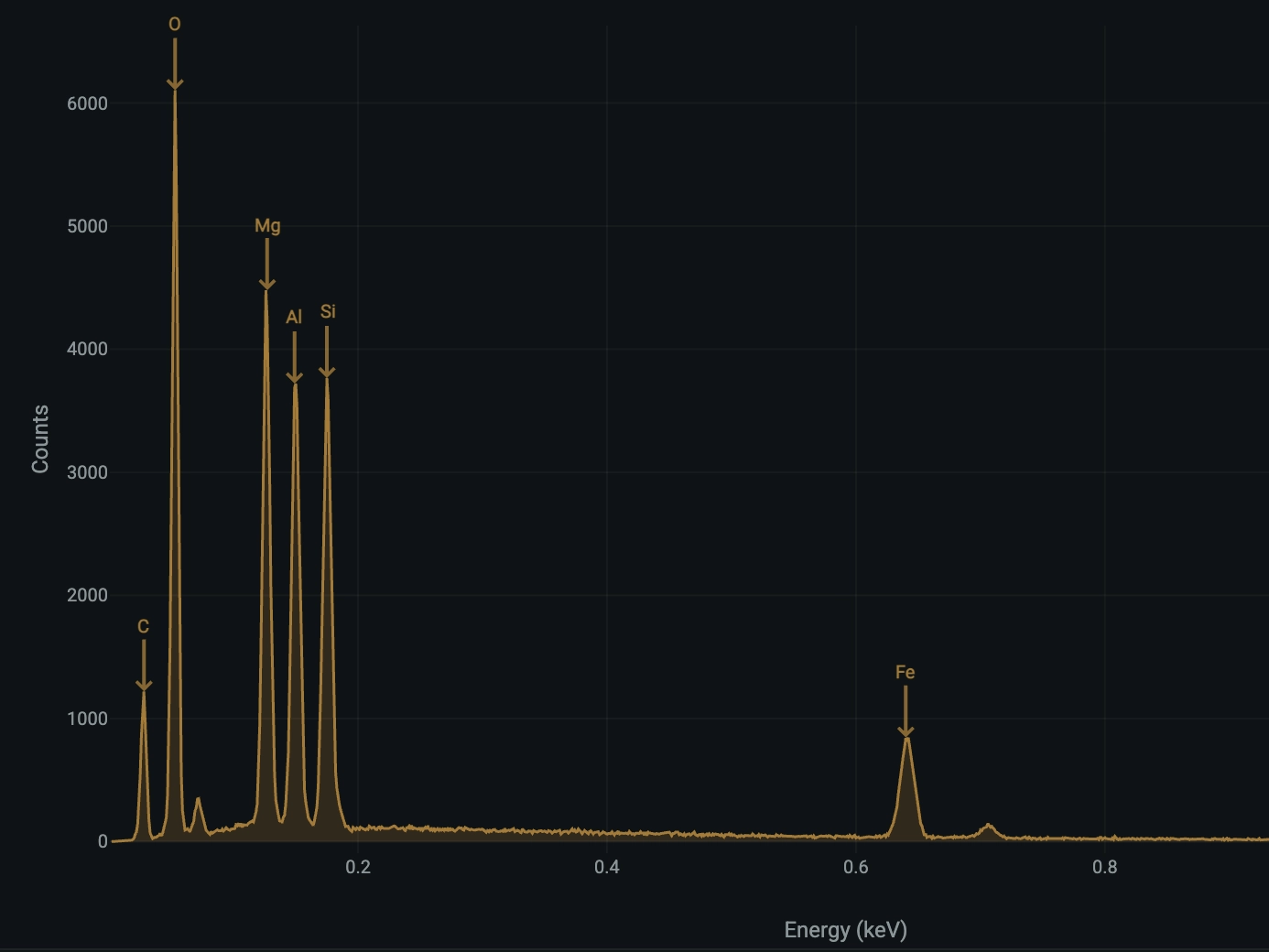
Garnet — BSE image with EDS elemental map Garnet · BSE + EDS elemental map

STEM-in-SEM — Transmission Mode

Some SEM instruments can operate in a transmission mode when the sample is very thin (<100–200 nm). Detectors placed below the sample collect electrons that pass through it. This mode — STEM-in-SEM — can reveal internal nanoscale structure and provides improved spatial resolution for EDS analysis compared to bulk conditions.

STEM-in-SEM is particularly useful for nanoparticles, thin films, biological ultrathin sections, and laminar material cross-sections prepared by FIB or ultramicrotomy.

▸ Technical parameters
  • Sample thickness requirement: typically < 100–200 nm
  • Detectors: bright-field (BF) and dark-field (DF) below the sample stage
  • Lateral interaction volume is dramatically reduced vs. bulk SEM
  • EDS spatial resolution in thin lamella can approach ~5–20 nm
  • Useful for: nanoparticles on membranes, FIB lamellae, cryo-sections, thin membranes
  • Not equivalent to dedicated TEM/STEM, but accessible without a full TEM instrument
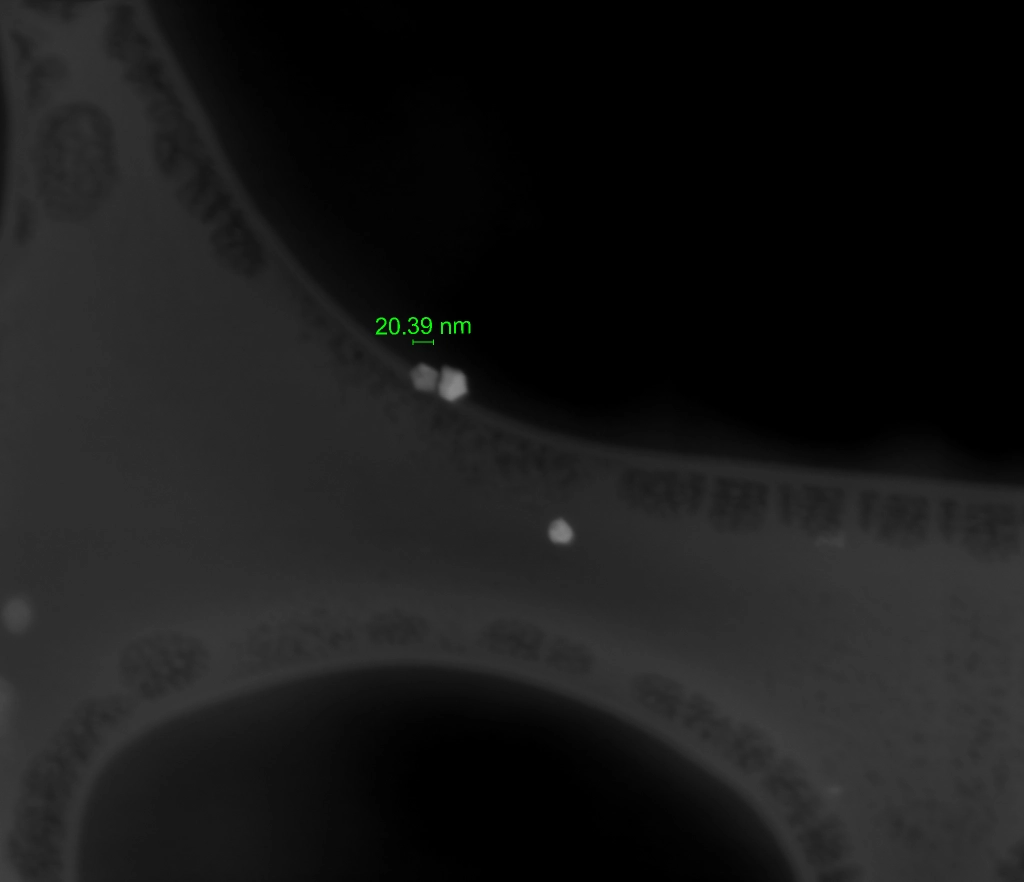
STEM-in-SEM answers: What internal structure can be seen when the sample is thin enough?
Ti nanoparticles — STEM-in-SEM Ti nanoparticles · STEM-in-SEM mode
4. Choosing the Right SEM Signal

No single signal is universally better. The choice depends on the scientific question. Surface morphology calls for SE; compositional contrast for BSE; chemical identification for EDS; and thin-sample internal structure for STEM-in-SEM.

Signal Main information Typical depth Strength Main limitation
SE Surface topography 0.5–5 nm Very high surface detail, 3D-like appearance Charging artifacts; topographic bias
BSE Atomic number contrast, phase distribution 100 nm–1 μm Phase and composition contrast without EDS Lower spatial resolution than SE
EDS Elemental composition, spectral maps 0.1–5 μm (bulk) Chemical identification, elemental mapping Limited spatial resolution; peak overlaps; matrix effects
STEM Internal thin-sample structure Sample thickness Higher analytical resolution in thin lamellae Requires demanding thin-sample preparation

5. Sample Preparation

SEM requires a stable interaction between the electron beam and the sample. Non-conductive samples accumulate charge, producing image drift and artifacts. Sample preparation is often as critical as the microscope settings themselves.

Conductive Coating

Au, Au-Pd, Pt, or Ir for SE imaging. Carbon for quantitative EDS (minimal spectral interference). Cr as an alternative for fine resolution. Typical thickness: 2–20 nm depending on goal.

Mounting & Grounding

Samples are mounted on aluminum stubs using carbon tape or silver paint. A continuous grounding path from sample to stub prevents charge accumulation. Loose particles must be avoided in the SEM chamber.

Beam-Sensitive Samples

Polymers, biological specimens, and hydrated samples require low kV (1–3 kV), low current, and short dwell times. Cryo-SEM or environmental SEM (ESEM) may be needed for hydrated or volatile specimens.

6. Application Gallery

Cells on biocompatible ceramic — SE
SE · Biology

Cells on Biocompatible Ceramic

SE imaging of cells grown on a biocompatible ceramic substrate, showing the interface between biological structures and inorganic surfaces.

BSE + EDS · Geoscience

Mineral Phase Identification

BSE contrast separates mineral phases by atomic number; EDS confirms elemental composition. Connected to the interactive EDS mineral database.

Gold nanoparticles — SE
SE · Nanomaterials

Gold Nanoparticle Distribution

SE imaging of gold nanoparticles characterizing size distribution, morphology, and aggregation state at the nanoscale.

Zeolite LTA framework — SE
SE · Materials

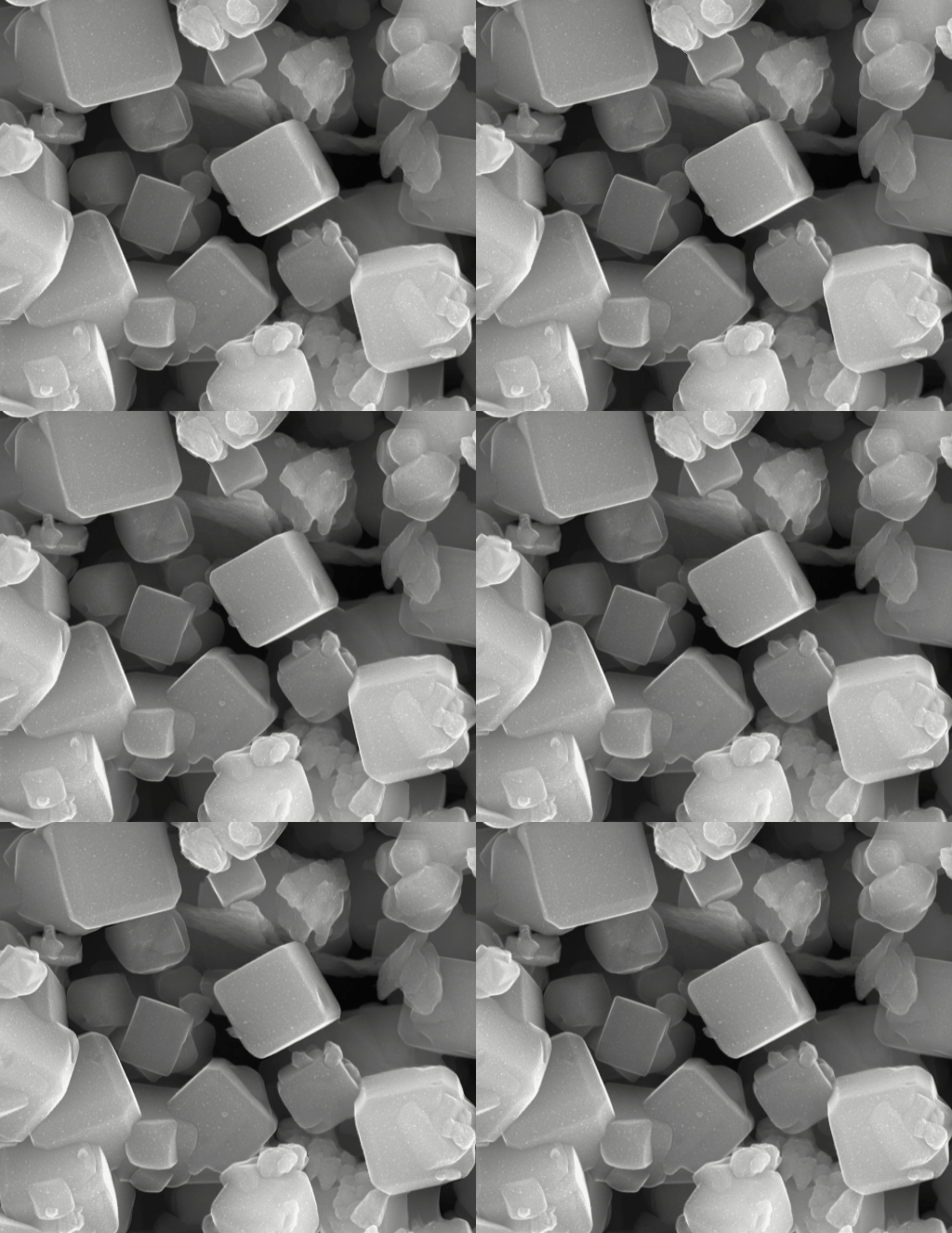
Zeolite LTA Microstructure

SE imaging of zeolite LTA crystals revealing their characteristic cubic morphology and surface architecture at the micro- and nanoscale.

TiO2 nanotube layer — SE
SE · Materials

TiO₂ Nanotube Layer

SE imaging of a TiO₂ nanotube layer, showing nanotube geometry, wall thickness, and surface distribution across the substrate.

Vitreous carbon surface — SE
SE · Materials

Vitreous Carbon Surface

SE imaging of vitreous carbon revealing its characteristic surface topography, conchoidal features, and microstructural texture.

Coming soon

Image Pending

New application example to be added.

Coming soon

Image Pending

New application example to be added.

Interactive Tool

EDS Mineral Database

As part of my work in microscopy and scientific visualization, I developed an interactive tool to explore EDS spectra from a database of approximately 100 minerals. The tool connects SEM-EDS theory with practical mineral identification — allowing users to inspect spectral peaks, compare elemental signatures, and understand how composition appears in energy-dispersive X-ray analysis.

Explore the EDS Mineral Database →

References